From Vibe Coding to Agentic Engineering: How I Finally Built My Dream App
Coding changed in December. Using a combination of Claude and Railway, I bypassed the usual developer roadblocks to launch a web app in record time.

In March of last year I finally decided to try several “Vibe Coding” tools that allowed non-developers the ability to create fully functional apps just by using natural language prompting. In summary I ran into several roadblocks for ideas I had. I did get one simple app concept to work but it still took a ton of effort to correct problems along the way, still had issues when completed and in the end I felt these tools (or models to be more specific) were not ready to execute our ideas effectively. Fast forward to the last few weeks and everything has changed.
For my next evaluation I decided that instead of using dedicated services like Lovable, Replit and Bolt I’d work locally with models directly. My first test was to create a script for Pinokio for an app I could run on my local machine and share it with others. I had an idea to create an app that could review all the posts for a specific list of users on X and generate a daily summary without having to read all the posts from the feed. I used the newly released Google Antigravity IDE and a combination of Gemini and Claude models to create the app successfully. This process went much better and smoother than previously and I was pretty amazed by how much better the models had gotten since I last attempted this.
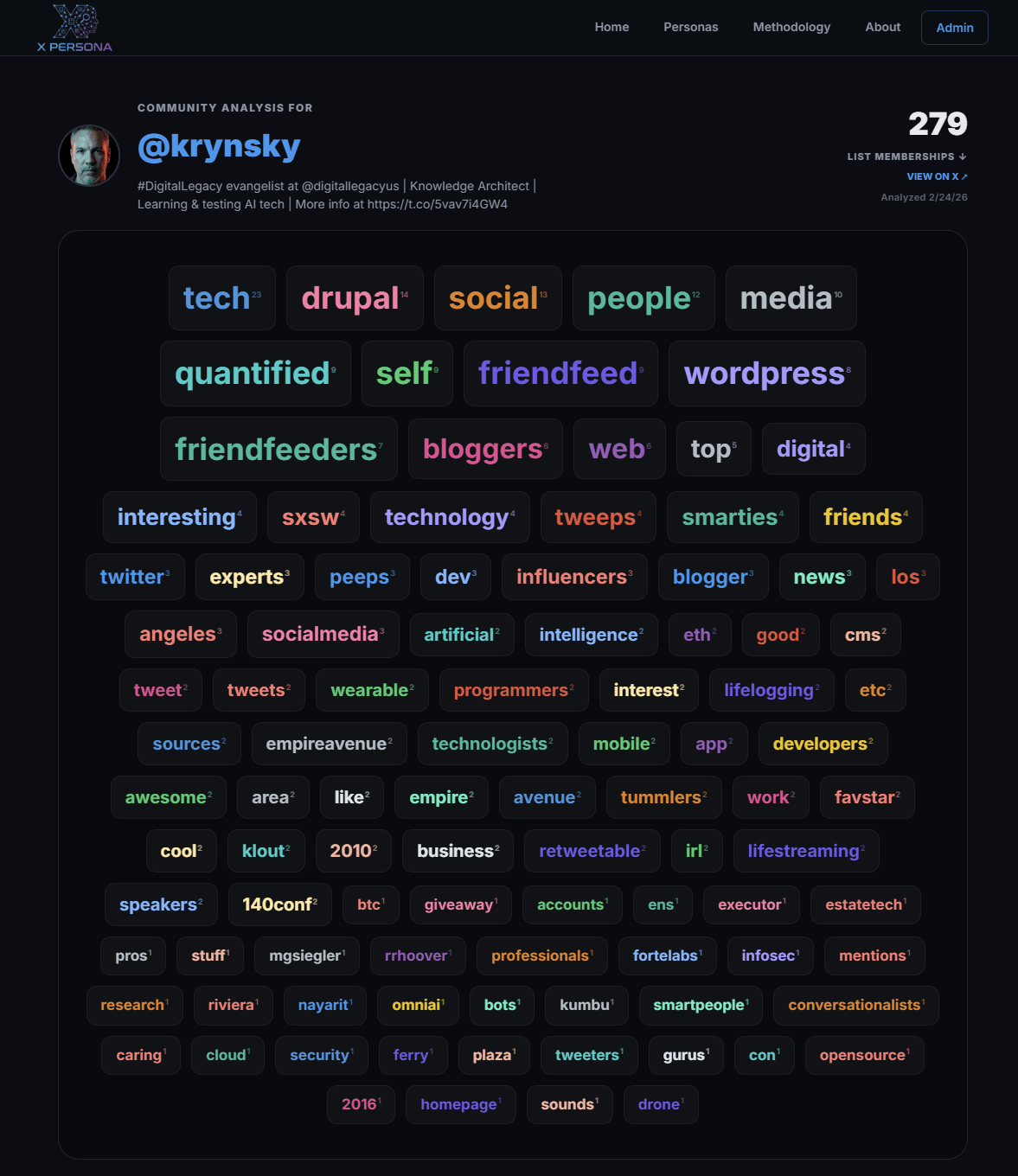
I then decided to revisit the same app idea I previously had during my experiment last March to analyze an X user based on the lists they appeared on. I decided to just add this as a new feature within the X List Summarizer app for Pinokio that I had already created. This too was created very easily with minimal effort and debugging and at this point I was shocked at how much better things had gotten. But I didn’t want to stop there. Creating an app to run locally was one thing, now I wanted to see if I can create an app that was publicly accessible over the web.
I decided to isolate the new X profile analyzer feature and generate a standalone app called X Persona for it that I could publish to a website. I had been using Google’s Antigravity IDE but they’ve suddenly put heavy limits on the Claude models. I ended up getting an Anthropic pro subscription and started using Claude Code to develop the app. I used the Opus 4.6 for the planning and then Sonnet 4.6 for the execution. It worked amazingly well. The dev was easily jumpstarted by referencing the previous codebase. Then I refactored the settings functionality to only be accessible by an admin and built a site dedicated to the this functionality and extended it with many new features.
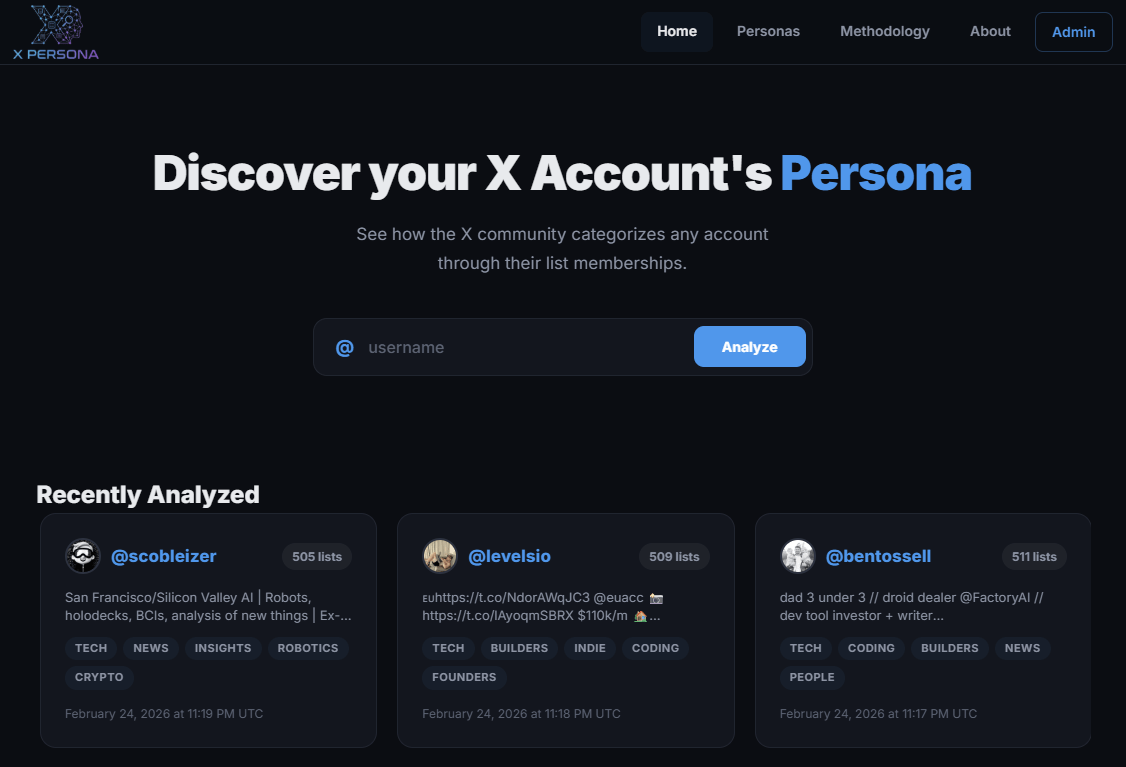
When it came time to deploy it to production I asked both Claude and Gemini to review my tech stack and recommend cost effective hosting providers that would also be reasonably simple for me to deploy to. They both highly recommended to use Railway with other options including Render and Fly.io. Claude then walked me through the whole process of deploying my project to Github which was a pre-requisite for deployment to Railway. Once complete it took me step by step on setting up the account and configuring it. I ran into several hiccups setting up the environment but Claude helped me debug all the issues until they were resolved and I was up and running in less than 2 hours. Both Claude and Railway blew me away at the simplicity of getting setup. Even configuring the sub-domain by connecting directly to my Cloudflare account was trivial. You can view the app I created now at X Persona.
Granted I have experience with hosting providers and running several WordPress and Drupal sites I did not think this process would be as simple as it turned out. Now I continue to work on new features locally, commit them to Github and then they get re-deployed to my app in Railway automatically. This seems like magic to me.
Now, I understand my limitations and realize this process is great for creating apps as a hobby. I have no delusions knowing there is required knowledge and experience for proper security configurations and architecture details needed for building larger scalable apps. These would be new challenges if I were creating something more significant. But I’m still pinching myself at what I’ve already been able to achieve. I’m extremely excited about several other new projects that are brewing in my mind and look forward to creating many more apps in the near future.
Back in March true developers were mocking and pointing out the major issues when creating vibe coded apps. However, I’ve seen the tide turn over the last few months. I continue to see long-time experienced devs confirming the power and advancements in these models with many of them stating they’re not manually coding much any more. Adrej Karpathy who coined “Vibe Coding” has now shifted the narrative to “Agentic Engineering”. Many devs are now reviewing, tweaking, and auditing the code but confirming that the models are now extremely capable.
I think we’re going to see an exponential explosiong of seasoned devs becoming more efficient and shipping much faster and a new generation of hobbyists like myself creating novel apps that could never have been possible due to knowledge and financial constraints. Extremely exiciting times are ahead.